
Asian & Irish Community Connect Conference
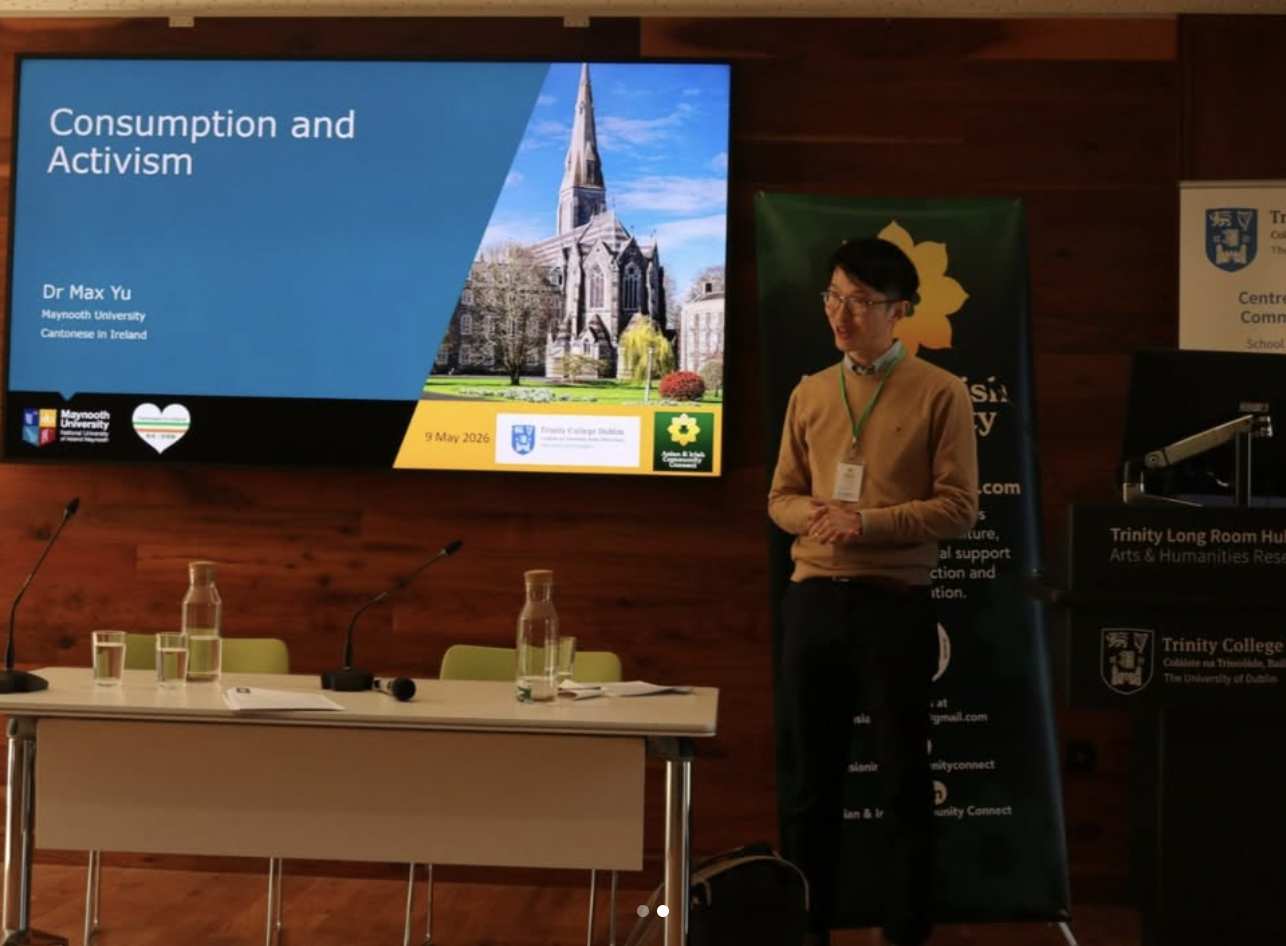
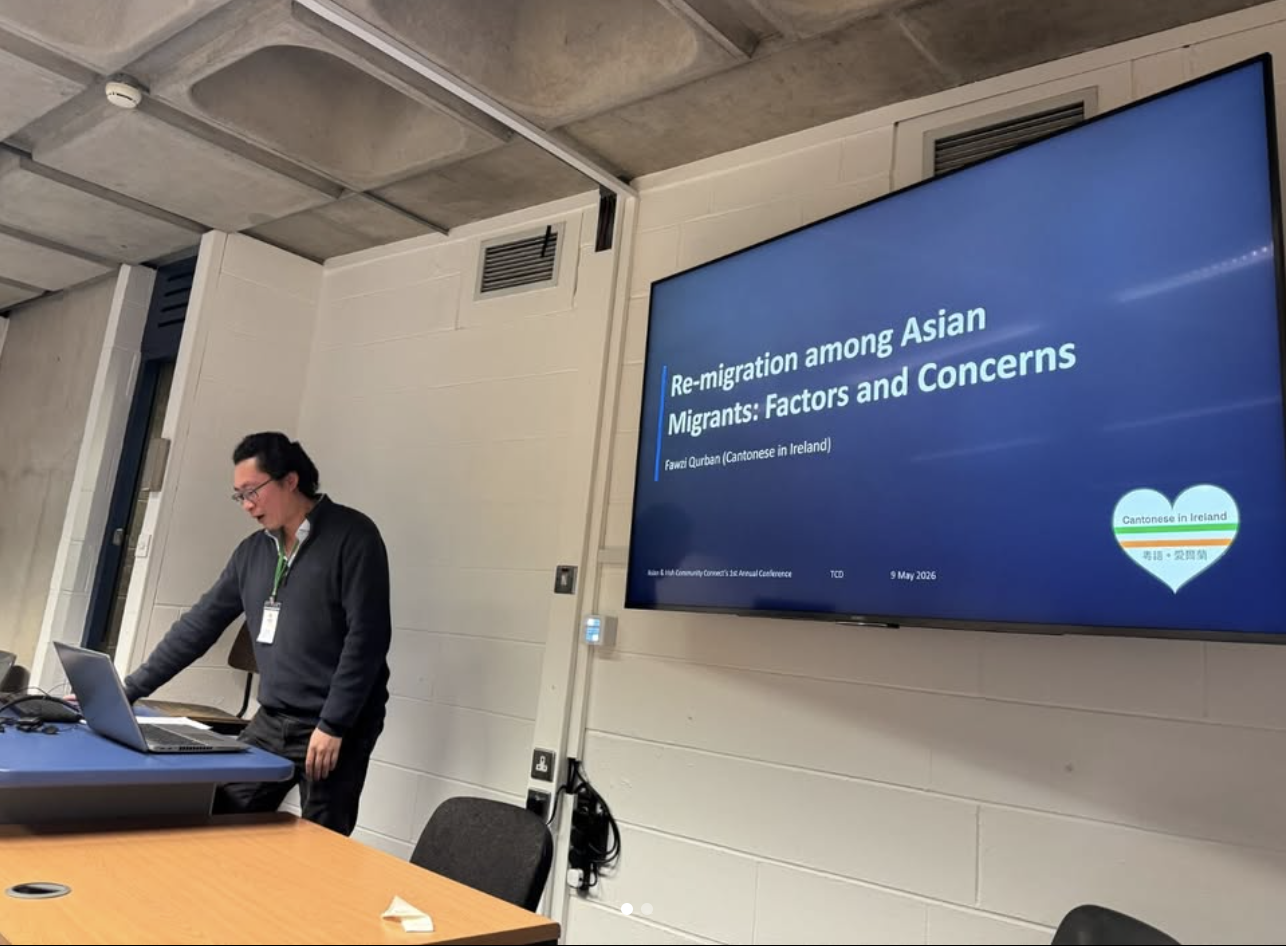
Fawzi Qurban and Max Yu, both professors and committee members, presented at the Asian & Irish Community Connect Conference hosted by the Trinity Centre for Asian Studies and Trinity College Dublin). Their work highlighted often overlooked Asian experiences and reflected our shared commitment to supporting and representing our community.
Fawzi examined the experiences of migrants who move onward, return to their home countries, or choose not to settle permanently. He challenged the implicit expectation that “successful” migrants should integrate, settle, and remain in one place. In doing so, he re vealed how dominant migration narratives leave little space for uncertainty, ambivalence, or alternative forms of belonging.
Max explored the growing politicisation of everyday consumption. He demonstrated how shopping, branding, and even routine choices like buying coffee can serve as expressions of political identity. This dynamic is also evident in parts of Asia with lower levels of democracy. His work invites us to consider whether consumer activism genuinely broadens democratic participation or subtly shifts responsibility for systemic change from institutions to individuals.
兩位教授兼委員會成員 Fawzi Qurban 同埋 Max Yu,早前喺由都柏林聖三一大學亞洲研究中心(Trinity Centre for Asian Studies)主辦嘅 Asian & Irish Community Connect Conference 上面發表咗演講。佢哋嘅研究點出咗好多平時被忽略嘅亞洲人經歷,亦反映出我哋一直以來對支持同代表本地社群嘅承諾。
Fawzi 嘅研究主要探討一啲選擇繼續移民、回流原居地、或者唔打算喺同一個地方定居嘅移民經歷。佢打破咗大眾一般認為「成功」嘅移民就一定要融入、安頓同留喺嗰度嘅固有觀念。佢嘅研究揭示咗,主流嘅移民論述其實好少留空間畀不確定性、糾結、或者其他形式嘅歸屬感。
Max 嘅研究就主要探討咗日常生活消費點樣變得越來越政治化。佢展示咗買嘢、品牌選擇、甚至好似平時買杯咖啡咁簡單嘅日常決定,都可以成為表達政治身份嘅方式。呢種動態喺一啲民主程度較低嘅亞洲地區亦非常明顯。佢嘅研究等我哋去反思:消費者行動主義究竟係咪真係拓寬咗民主參與,定係默默地將改善體制嘅責任,由制度層面轉嫁咗去個人身上。